
Final Tariff-Proof Diamond Deals: Expert Texas Tips – Year's End Smart Shop
Listen up, Texas diamond shoppers. We need to talk about something that's been brewing in the background while you've been planning proposals, anniversaries, and holiday gifts. Tariffs on imported goods—including diamonds—have been making headlines, and savvy buyers are paying attention. But here's the plot twist: right now, at year's end, you've got a golden window to score incredible diamond deals that sidestep the whole tariff mess entirely.
The Tariff Talk Nobody Wanted
Let's cut through the noise. Diamonds, despite their timeless appeal, aren't immune to global economics. Most diamonds sold in the United States are imported, and when tariffs on imports increase, prices typically follow. It's not rocket science—it's just supply chain reality.
But before you panic or postpone that engagement ring purchase, understand this: the diamond market doesn't flip overnight like a light switch. There's inventory already in the country, dealers who locked in prices months ago, and jewelers sitting on stock they're motivated to move before year's end. That's where your opportunity lives.
Texas, with its robust jewelry market spanning Houston's Galleria shops to Dallas's Highland Park boutiques and Austin's eclectic downtown jewelers, offers particularly strong opportunities right now. Texas jewelers know their customers are sharp, price-conscious, and won't tolerate price gouging. Competition here works in your favor.
Why Year's End Changes Everything
December isn't just about Christmas carols and countdowns. For jewelers, it's financial crunch time. They need to clear inventory before January's fresh start, meet annual sales targets, and free up capital for new collections. This creates negotiating leverage you simply don't have in March or July.
Add tariff uncertainty into the mix, and jewelers face a dilemma. Do they hold stock hoping prices rise, or move it now at attractive prices to ensure cash flow? Most choose the latter, especially with diamonds—which, unlike trendy fashion jewelry, don't really go "out of style" but do tie up significant capital.
This year specifically, the convergence of year-end clearance pressure and tariff speculation creates a perfect storm of opportunity. Jewelers who imported diamonds six months ago at lower effective prices are competing with others who waited. Guess who's more motivated to deal?
What "Tariff-Proof" Actually Means
Let's clarify the terminology. "Tariff-proof" doesn't mean these diamonds magically avoid all economic forces. It means buying smart right now—from existing domestic inventory that was imported before recent tariff discussions heated up, from jewelers motivated to move stock regardless of future pricing, and with negotiating power on your side.
You're essentially buying at yesterday's prices in today's uncertain market. The diamonds sitting in Texas jewelry stores right now? Most arrived months ago. Their cost to the jeweler is locked in. But the jeweler's willingness to negotiate that price? That's highly flexible in late December.
Texas Jeweler Secrets: What They Won't Tell You
Having spent years in the Texas jewelry scene, here's insider knowledge that changes the game. Texas jewelers, particularly those outside the major chains, often source diamonds through multiple channels. Some work directly with cutters, others through wholesalers, and savvy ones maintain relationships with estate jewelry networks.
Estate diamonds represent hidden gold mines. These stones—from vintage pieces, inheritances, or trade-ins—never touched modern import tariffs. They're already in the country, often for decades. A jeweler who specializes in estate diamonds or accepts trade-ins builds inventory that's completely insulated from import price fluctuations.
Local cutters and wholesalers in Houston's diamond district or Dallas's jewelry centers often maintain inventory bought months or years prior. These aren't subject to sudden tariff impacts. Building relationships with jewelers who source locally within Texas or the broader U.S. market gives you access to tariff-resistant pricing.
Cash talks, especially now. Credit card processing fees eat into jeweler margins. Offering cash or debit payment—particularly on year-end deals—can unlock additional discounts. One Houston jeweler confided that cash deals can save customers an extra 3-5% because he's not paying processing fees.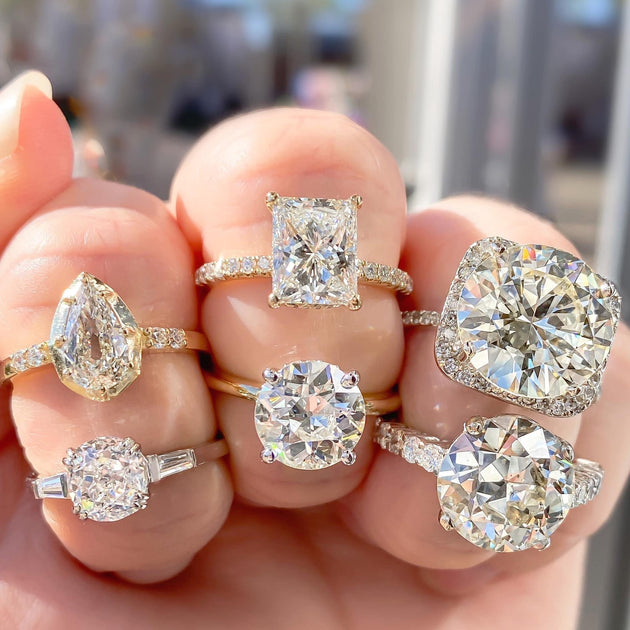
The Art of Year-End Negotiation
Walking into a jewelry store and demanding discounts won't work. But strategic negotiation in late December? That's different. Here's your playbook.
Start by doing homework. Know the Four Cs—cut, color, clarity, and carat weight. Understand what quality you want and what you're willing to compromise on. This knowledge prevents jewelers from steering you toward overpriced stones because they sense uncertainty.
Visit multiple jewelers with the same specifications. "I'm looking for a 1-carat, G-color, VS2-clarity diamond with excellent cut" at three different stores reveals the market rate instantly. You'll see who's competitive and who's not.
Ask about year-end inventory clearance explicitly. Many jewelers run formal or informal year-end sales but don't advertise heavily. Simply asking "Do you have any year-end deals on diamonds?" opens conversations they're happy to have.
Inquire about stones that have been in inventory longer. Jewelers track this. A diamond that's sat for eight months? They want it gone. This isn't about quality—diamonds don't spoil—it's about cash flow. Older inventory often comes with better pricing flexibility.
Consider slightly "off" specifications. The difference between a D-color and E-color diamond is imperceptible to most people but significant in price. Same with VS1 versus VS2 clarity. These small compromises unlock substantial savings without sacrificing beauty.
Bundle strategically. Buying a diamond and setting together often opens negotiating room. Jewelers make money on both, so packaging the purchase gives them more margin to play with while still offering you overall savings.
Texas-Specific Shopping Advantages
Texas offers unique advantages for diamond shopping that other states don't match. No state income tax means more money in your pocket for purchases. Texas's competitive retail environment—from independent jewelers to major retailers—creates price pressure that benefits consumers.
Houston's diamond district around Westheimer and Hillcroft hosts numerous wholesalers who sell to the public. These aren't fancy showrooms with champagne service, but prices can run 20-30% below retail. If you know what you want and don't need hand-holding, wholesalers deliver value.
Dallas's love affair with luxury means high-end jewelers compete fiercely. The same stone might be priced differently at three Highland Park locations simply because they're targeting different clientele. Shop around even within small geographic areas.
Austin's independent jeweler scene brings creativity and flexibility. Smaller operations often have lower overhead and more negotiating freedom than chain stores bound by corporate pricing. They also tend toward unique designs and alternative stones that offer value.
San Antonio's military community means jewelers understand budget consciousness. They're accustomed to working with customers who want quality but need value. This creates a practical, no-nonsense shopping culture that cuts through marketing fluff.
Red Flags and Scams to Avoid
Year-end desperation can make buyers vulnerable. Protect yourself by recognizing common schemes.
Pressure tactics about tariffs creating scarcity are usually overblown. Yes, prices might increase eventually, but legitimate jewelers don't use scare tactics. If someone's pushing "buy now or pay 40% more next month," walk away. That's manipulation, not market reality.
Too-good-to-be-true pricing deserves scrutiny. A 2-carat diamond at half the market rate probably has issues—poor cut quality, clarity problems, questionable certification. Insist on GIA or AGS certification for any significant diamond purchase.
Certification games matter. Some jewelers use lesser-known grading labs that inflate quality ratings. GIA (Gemological Institute of America) and AGS (American Gem Society) are gold standards. Other certifications might be legitimate but require extra verification.
Hidden costs can destroy your deal. That amazing diamond price might not include the setting, sizing, or insurance appraisal you'll need. Get complete out-the-door pricing before committing.
Upgrade programs sound generous but read fine print carefully. Some lock you into buying from that specific jeweler forever, others require spending double your original purchase to upgrade. These aren't necessarily scams but know what you're agreeing to.
Certification: Your Non-Negotiable
Never—and I mean absolutely never—buy a diamond over $1,000 without proper certification. GIA reports are the industry standard. They provide objective, third-party verification of exactly what you're buying.
Certification protects you from overpaying for lower quality stones. It provides documentation for insurance. It ensures resale value if circumstances change. And it gives you leverage if any disputes arise about quality or authenticity.
Some jewelers resist showing certification or claim their "in-house expert" evaluated the stone. Nope. That's not acceptable for significant purchases. Reputable jewelers happily provide certification because it validates their expertise and protects both parties.
Alternative Stones: The Smart Shopper's Secret
Here's something most jewelers won't volunteer: diamonds aren't your only option for stunning, valuable gemstones. And alternatives often sidestep tariff concerns entirely while delivering comparable or superior beauty.
Lab-grown diamonds have revolutionized the market. They're chemically identical to mined diamonds, cost 30-60% less, and face different import dynamics than natural stones. For budget-conscious buyers or those prioritizing size over natural origin, lab-grown diamonds deserve serious consideration.
Moissanite offers brilliant sparkle exceeding diamonds at a fraction of the price. Modern moissanite has overcome the yellowish tint of earlier versions. It's nearly as hard as diamond, making it durable for daily wear. And it's largely domestic-produced, completely avoiding import tariffs.
Sapphires—particularly white sapphires—create diamond-like appearances with unique character. Colored sapphires add personality impossible with diamonds. Royal blue sapphires carry prestige rivaling or exceeding diamonds in many cultures.
Morganite brings peachy-pink romance perfect for rose gold settings. It's durable, affordable, and increasingly popular for engagement rings. Its soft color photographs beautifully and flatters all skin tones.
Investment vs. Emotion: Finding Balance
Diamond purchases blend practical investment with emotional significance. Balancing these isn't always easy, but year-end shopping demands it.
From an investment perspective, diamonds generally hold value better than most consumer goods but aren't liquid assets like stocks or bonds. You'll typically lose money if you need to sell quickly. The goal isn't maximizing financial return—it's minimizing loss while maximizing emotional value.
Buy quality over size when forced to choose. A smaller diamond with excellent cut, good color, and clarity will retain value better than a larger stone with obvious flaws. This also ensures daily wearability and pride in ownership.
Consider the jewelry piece's lifespan. An engagement ring or family heirloom piece deserves investment-grade quality. Fashion jewelry or trendy pieces? Prioritize style and price over investment characteristics.
Emotional value matters more for most buyers. That diamond represents love, commitment, celebration, or achievement. Its emotional ROI—the joy it brings daily—matters more than theoretical resale value. Just don't overpay dramatically for that emotional value.
Timing Your Purchase: The Final Days
If you're reading this in late December, you're in the sweet spot. The week between Christmas and New Year's represents peak negotiating power. Jewelers have seen holiday rush results, know their annual numbers, and are thinking about fresh starts in January.
Walk in confident and informed. You're not desperate; you're selective. This mindset changes negotiations fundamentally. You're doing them a favor by helping clear inventory, not begging for deals.
Weekday shopping typically brings more negotiating success than weekends. Fewer customers, less pressure, more time for jewelers to work with serious buyers. Tuesday through Thursday afternoons are particularly good.
Don't reveal desperation or time constraints. If you need a ring by New Year's Eve, don't lead with that. It kills negotiating leverage instantly. Act like you're planning ahead, even if you're not.
After the Purchase: Protecting Your Investment
You've negotiated successfully and bought smart. Now protect that investment properly.
Insurance should be arranged immediately. Many homeowners or renters policies offer jewelry riders, but verify coverage limits and deductibles. Specialized jewelry insurance might offer better protection for high-value pieces.
Annual inspections catch problems early. Most jewelers offer free inspection and cleaning. Use this service. Prongs wear down, settings loosen, and early detection prevents lost stones.
Professional cleaning maintains sparkle and lets jewelers examine the piece closely. Do this every six months minimum, more frequently for daily-wear pieces.
Documentation storage matters. Keep certification, appraisals, and purchase receipts in fireproof storage or safety deposit boxes. Photograph the piece from multiple angles for insurance purposes.
The Bigger Picture
Diamond shopping in late December under tariff uncertainty feels stressful, but it shouldn't be. You're making a purchase about love, celebration, or personal achievement. The economics matter—you should never overpay—but they're not the whole story.
Texas offers incredible jeweler variety, competitive pricing, and year-end opportunities that make now the right time to buy. You've got negotiating leverage, motivated sellers, and existing inventory that hasn't been touched by recent tariff discussions.
Do your homework, shop confidently, negotiate fairly, and trust your instincts. The right diamond at the right price is out there, and late December 2025 might just be the perfect time to find it.
FAQs
Q: Will diamond prices definitely increase because of tariffs?
Possibly, but not overnight or uniformly. Tariff impacts ripple through supply chains over months. Existing inventory, alternative sourcing, and market competition all affect actual retail prices. Buying quality diamonds now locks in current pricing regardless of future changes.
Q: Should I buy lab-grown diamonds instead of natural ones?
This depends on personal values and budget. Lab-grown diamonds cost significantly less, are environmentally friendlier, and are chemically identical to natural diamonds. However, they may not hold resale value as well. Consider what matters most—size and budget, or natural origin and traditional value retention.
Q: How much can I realistically negotiate off diamond prices in late December?
It varies, but 10-20% off listed prices is reasonable for in-stock diamonds during year-end clearance. Larger discounts might be available on stones in inventory for extended periods or when bundling diamond and setting purchases. Cash payment can add another 3-5% savings.
Q: Are Houston wholesale diamond dealers trustworthy?
Many are, but do your due diligence. Verify GIA certification, compare prices across multiple wholesalers, and check online reviews. Reputable wholesalers have established businesses and customer bases. Avoid those operating from temporary locations or refusing to provide certification.
Q: What's more important: diamond size or quality?
Quality generally matters more for investment value and daily satisfaction. A smaller, high-quality diamond sparkles beautifully and photographs well. A larger, low-quality diamond may look dull or cloudy. Balance depends on personal priorities, but compromising quality usually brings regret.
Q: Can I negotiate custom settings in addition to diamond prices?
Absolutely. Settings carry significant markup, and jewelers often have more flexibility here than on diamonds themselves. If they can't budge on diamond pricing, ask about including a setting, sizing, or additional services at no extra charge.
Q: How do I verify a GIA certification is legitimate?
Visit GIA.edu and use their report check service. Enter the report number from the certification, and you'll see if it matches GIA's database. This confirms the certification is genuine and matches the diamond you're considering.
Q: Should I buy during the week after Christmas or wait until January sales?
The week between Christmas and New Year's often brings better deals. Jewelers want to close out inventory before year-end for accounting purposes. January sales certainly exist, but you'll compete with New Year's proposal shoppers and jewelers have less immediate pressure to deal.
Exotic Diamonds: Beyond Traditional White Stones
When discussing tariff-proof diamond deals, don't overlook exotic colored diamonds that offer both beauty and potential value appreciation. These stones add personality while often providing better investment characteristics than traditional white diamonds.
Fancy Yellow Diamonds range from subtle champagne to intense canary. Texas sunshine seems reflected in these warm stones, making them regionally appropriate and distinctive. Yellow diamonds with GIA Fancy Intense or Fancy Vivid color grades are particularly valuable and rare.
Champagne and Cognac Diamonds bring earthy sophistication perfect for Texas's practical luxury aesthetic. These brown-toned diamonds cost significantly less than white diamonds but deliver comparable sparkle. They pair beautifully with rose gold, creating vintage-inspired looks that feel both modern and timeless.
Pink Diamonds represent the apex of rarity and romance. With Australia's Argyle mine closed, pink diamonds have become even more precious. Even small pink diamond accents in engagement rings create extraordinary visual impact and carry serious investment potential.
Salt and Pepper Diamonds showcase natural inclusions as features rather than flaws. Each stone is genuinely unique, appealing to individualists who reject cookie-cutter jewelry. These diamonds cost less than flawless stones while offering distinctive character that photographs beautifully.
Blue Diamonds evoke ocean depths and royal heritage. While natural blue diamonds command astronomical prices, fancy light blue diamonds offer accessible entry into colored diamond collecting. They create striking contrast in white metal settings.
Black Diamonds bring modern edge to traditional diamond jewelry. These opaque stones offer sophistication without conventional sparkle, perfect for contemporary designs or masculine jewelry. They're particularly popular in Texas's urban centers where edgy style thrives.
Cognac diamonds with natural color are particularly interesting from a tariff and value perspective. Many come from Australian sources, and with the Argyle mine closure, supply has tightened even as demand increases. Buying these now potentially positions you ahead of future price appreciation.
The tariff impact on colored diamonds varies by origin. Australian diamonds face different import considerations than African stones. This complexity creates opportunities for informed buyers working with knowledgeable jewelers who understand sourcing nuances.
Exotic diamonds also offer negotiation advantages. Many jewelers stock primarily white diamonds, viewing colored stones as specialty items. If you're interested in colored diamonds, you might find jewelers particularly motivated to deal simply because these pieces represent slower-moving inventory.
From an investment standpoint, rare colored diamonds—particularly pinks, blues, and vivid yellows—have appreciated faster than white diamonds historically. While past performance never guarantees future results, supply constraints on certain colors suggest continued value appreciation.
The emotional and aesthetic value of colored diamonds shouldn't be understated. These stones create jewelry that's immediately recognizable and distinctive. They become signature pieces that define personal style rather than blending into diamond jewelry crowd.