
Why Some Diamonds Cost 10x More Than Others
Two diamonds can look almost identical to the untrained eye—yet one costs $5,000 and the other costs $50,000.
Same sparkle. Same size. Same ring setting.
So what’s going on?
In 2026, diamond pricing feels mysterious to many buyers. But once you understand how diamonds are graded, sourced, cut, and valued, the price gap starts to make sense. The truth is simple:
Small differences in quality can create massive differences in price.
At Exotic Diamonds, we believe buying diamonds should feel empowering—not confusing. This guide breaks down exactly why some diamonds cost 10x more than others, what really drives value, and how to choose wisely without overpaying.
The Foundation: The 4Cs (But It’s Deeper Than You Think)
Most people have heard of the 4Cs:
-
Cut
-
Color
-
Clarity
-
Carat
But here’s the key insight:
👉 It’s not just about the grade—it’s about how rare each combination becomes.
Let’s break it down properly.
1. Cut: The Biggest Price Multiplier

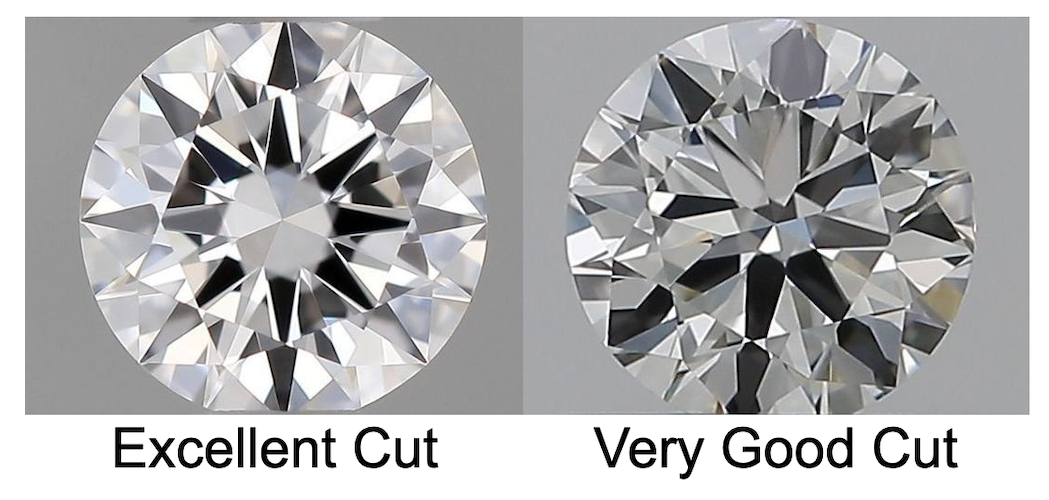
If there’s one factor that can dramatically change a diamond’s value, it’s cut quality.
A perfectly cut diamond:
-
Reflects light evenly
-
Appears brighter and more “alive”
-
Hides minor imperfections better
A poorly cut diamond:
-
Looks dull
-
Appears smaller
-
Lacks brilliance
Why Cut Affects Price So Much
An “Excellent” cut diamond may require:
-
Losing more rough material
-
Extra precision
-
Higher craftsmanship standards
That means fewer diamonds qualify at the top level—making them rarer.
Even a slight shift from “Very Good” to “Excellent” can significantly increase price.
2. Color: The Invisible Premium


Most diamonds have subtle hints of color—usually yellow or brown.
The grading scale runs from:
-
D (colorless, rarest)
-
Down to Z (visible color)
To most buyers:
-
D and G diamonds may look identical
-
But price differences can be dramatic
Why?
Because truly colorless diamonds are rare in nature.
Moving from G to D might double or triple the price—even if your eye barely sees a difference.
This is where smart buyers find balance.
3. Clarity: Microscopic Details, Massive Price Gaps
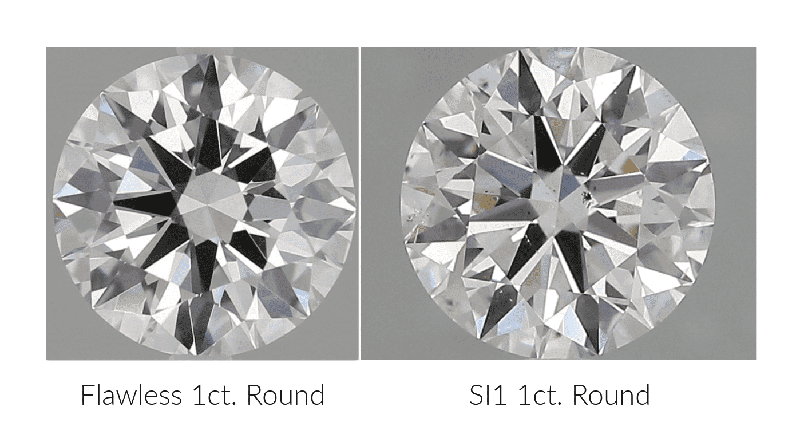


Clarity measures internal imperfections (inclusions).
Grades range from:
-
Flawless (FL)
-
Internally Flawless (IF)
-
Very Very Slightly Included (VVS)
-
Slightly Included (SI)
-
Included (I)
Here’s the reality:
Two diamonds may look identical to your eye.
But under 10x magnification, one has microscopic inclusions.
That tiny difference?
It can mean thousands—or tens of thousands—of dollars.
Why This Happens
Flawless diamonds are incredibly rare.
Rarity always increases price exponentially—not gradually.
4. Carat: Where Prices Jump Dramatically
Carat weight isn’t linear.
A 1.00-carat diamond doesn’t cost double a 0.50-carat diamond.
It may cost three or four times more.
Why?
Because:
-
Large rough diamonds are rare
-
As size increases, availability drops sharply
-
Demand spikes at “milestone weights” (1ct, 2ct, 3ct)
Crossing a carat threshold—even by 0.01ct—can cause huge price jumps.
The Hidden Factors Most Buyers Don’t Know
The 4Cs are only the beginning.
Here’s where prices really start to separate.
5. Diamond Shape (Some Cuts Cost More)
Round brilliant diamonds cost more than most fancy shapes.
Why?
-
Higher demand
-
More rough diamond waste during cutting
-
Superior sparkle
An oval, cushion, or emerald cut may cost significantly less per carat—even at identical quality grades.
Same size. Same clarity.
Different shape. Massive price difference.
6. Certification & Grading Authority
Diamonds graded by stricter labs (like GIA) often cost more.
Why?
-
Consistency
-
Market trust
-
International recognition
Two diamonds with “similar” grades from different labs can vary widely in real value.
7. Natural vs Lab-Grown Diamonds
In 2026, lab-grown diamonds have changed the pricing conversation completely.
Lab-grown diamonds:
-
Are chemically identical
-
Cost significantly less
-
Offer larger size for the price
Natural diamonds:
-
Carry geological rarity
-
Have long-term supply constraints
-
Maintain traditional market prestige
The price difference between natural and lab-grown can be dramatic—sometimes 3x–5x for similar specs.
8. Rarity Combinations (This Is Where 10x Happens)
Here’s the real reason some diamonds cost 10x more:
Because they combine multiple rare traits.
For example:
-
3-carat
-
D color
-
Flawless clarity
-
Excellent cut
-
Natural origin
That combination is extraordinarily rare.
When rarity stacks, price multiplies.
Why Two “Identical” Diamonds Aren’t Identical
Even if two diamonds share:
-
Same carat
-
Same clarity grade
-
Same color grade
They can still differ in:
-
Light performance
-
Proportions
-
Depth and table percentage
-
Symmetry and polish
Subtle performance differences influence price.
The best diamonds don’t just look good—they perform beautifully under light.
The Psychology of Diamond Pricing
Let’s talk honestly.
Some of the price gap is emotional.
People pay more for:
-
Perfection
-
Rarity
-
Milestone symbolism
-
Bragging rights
There’s nothing wrong with that—luxury includes emotional value.
But understanding the difference between emotional and functional value is key.
How to Avoid Overpaying
If you don’t need absolute perfection, you can save significantly.
Smart buyer strategies:
✔ Choose G–H color instead of D–F
✔ Choose VS clarity instead of flawless
✔ Stay just under milestone carat weights (0.90ct vs 1.00ct)
✔ Prioritize cut above everything else
Often, you can reduce price dramatically without reducing visual beauty.
When Paying 10x More Makes Sense
Sometimes, higher price is justified.
It makes sense when:
-
The diamond is exceptionally rare
-
It’s for legacy or heirloom purposes
-
Investment-grade rarity matters
-
Emotional significance outweighs cost
Luxury isn’t always about saving—it’s about choosing intentionally.
Final Thoughts: Diamonds Are Priced by Rarity, Not Sparkle Alone
The reason some diamonds cost 10x more than others comes down to one word:
Rarity.
Small differences in:
-
Cut precision
-
Color purity
-
Clarity perfection
-
Carat weight
…create exponential price shifts.
In 2026, the smartest buyers don’t chase the most expensive diamond.
They chase the one that:
-
Looks stunning
-
Fits their lifestyle
-
Balances quality and budget
-
Feels meaningful
Because true luxury isn’t about paying more.
It’s about understanding what you’re paying for. 💎
FAQs – Exotic Diamonds
Q1. Why do two diamonds of the same size cost very different amounts?
Because differences in cut, color, clarity, rarity, and certification dramatically affect price.
Q2. Does flawless clarity make a big price difference?
Yes. Flawless diamonds are extremely rare and significantly more expensive.
Q3. Are round diamonds more expensive than other shapes?
Usually yes, due to demand and cutting waste.
Q4. Why are natural diamonds more expensive than lab-grown?
Natural diamonds are geologically rare and have traditional market value.
Q5. How can I save money without sacrificing beauty?
Choose slightly lower color or clarity grades and prioritize excellent cut.